Key takeaways
- The market is converging on layered provenance, not one universal watermark.
- Text remains harder to verify than images, audio or video.
- Watermarks raise the cost of deception, but no verification method is foolproof.
The EU AI Act has turned AI provenance from a research problem into a product requirement. Anthropic is watermarking Claude’s words, Google is removing visible badges, and the rest of the industry is converging on a layered but imperfect answer.
For most of the generative AI boom, the industry has been obsessed with what models can create. The next phase will be about proving where that creation came from. This month, Anthropic announced that Claude would begin placing an imperceptible watermark in text it generates. Google then appeared to move in the opposite direction, saying users could remove the visible watermark from AI-generated images, video and music. The announcements sound contradictory. They are not.
Google is removing a logo that humans can see while retaining its invisible SynthID watermark and C2PA provenance metadata. Anthropic is adding a signal that humans cannot see but authorised detectors can find. Both companies are betting that the future of AI disclosure will sit less in a conspicuous stamp on the surface and more in a machine-readable trust layer underneath. The timing is significant. Anthropic CEO Dario Amodei recently described the public backlash against AI as “fundamentally a crisis of trust”. Watermarking will not resolve that crisis on its own, but it gives companies a concrete way to make AI-generated content more accountable and its origins easier to verify. That shift is being accelerated by regulation. It also opens a new market for startups.
What the EU AI Act actually requires
The shorthand version, “the EU now requires companies to disclose when text was written by AI,” is directionally right, but too broad. Article 50 of the EU AI Act creates obligations on both sides of the generative AI stack.
Providers of systems that generate synthetic text, audio, images or video must ensure that outputs are marked in a machine-readable format and are detectable as artificially generated or manipulated. The technical solutions must be effective, interoperable, robust and reliable, as far as technically feasible.
Deployers, meaning the companies and organisations using the systems, must disclose when AI-generated or manipulated text is published for the purpose of informing the public on matters of public interest. There is an important exception where the content has undergone human review or editorial control and a person or organisation holds editorial responsibility for it. Separate disclosure rules apply to deepfakes, with accommodations for evidently artistic, satirical and fictional works.
In other words, this is not a blanket requirement to label every AI-assisted email, product description or edited sentence. But it is a meaningful disclosure regime for public-interest content, and it makes provenance a product requirement for model providers. Most Article 50 transparency obligations began applying on 2 August 2026. The practical question is no longer whether the industry needs AI provenance, but what kind will work.
Anthropic brings watermarking to words
Images can carry metadata. Text usually cannot. Copying a paragraph from one document to another strips away the file that contained it, leaving only words behind. Anthropic’s answer is to make the signal part of the prose itself.
According to Anthropic’s explanation, Claude chooses among alternative wordings that preserve meaning and quality while creating a statistical pattern. The output reads normally to a person, but someone with Anthropic’s secret detection key can test a sufficiently long passage and estimate whether Claude was involved.
The design has several sensible properties. The watermark survives copying and pasting because it lives in the choice of words rather than in a document header. It is applied at the model level, including through Claude’s API and cloud distribution partners. It also applies to translations, where Claude chooses essentially every word.
It has equally important limitations. Short passages may not carry enough signal. Light proofreading of human writing may be undetectable because Claude changed too little. Heavy editing, paraphrasing or translation by another model can weaken or erase the pattern. And a positive result can show that Claude was likely involved, not whether Claude drafted the text or substantially edited it. This is already relevant in academia, where major publishers increasingly use automated research-integrity screening and some tools flag AI-generated material in submitted manuscripts. The level of screening varies by journal, however, and imperfect detection means some AI-generated work will still slip through while legitimate work may be flagged.
That makes Anthropic’s watermark a provenance signal, not a plagiarism detector, lie detector or proof of authorship. This distinction will matter in schools, newsrooms, courts and workplaces, where probabilistic evidence can easily be over-interpreted. Anthropic also plans C2PA Content Credentials for Claude-generated images. The combination mirrors the broader industry consensus: use different signals for different media, and use more than one layer where possible.
Google removes the badge, not the provenance
Google’s announcement is more interesting than the headline suggests. As TechCrunch reported, users can now remove the visible sparkle watermark from Google’s AI-generated images, videos and songs. The option is not available where local law requires a visible mark.
Crucially, Google is not abandoning watermarking. The invisible SynthID signal remains, as does C2PA-related metadata. Google is separating disclosure into two layers: a visible product label that can be optional, and an embedded provenance signal intended to travel with the media.
This is “against the grain” only if we assume that a watermark must be visible. In practice, visible marks are easy to crop, cover or remove; they can also make legitimate creative work feel unfinished. Invisible marks are less intrusive and can survive some transformations, while C2PA metadata can carry richer information about origin and edits.
Neither is indestructible. Metadata can be stripped. Watermarks can be degraded. A determined bad actor can generate content with an unmarked open model, photograph a screen or repeatedly transform an asset. The goal is not perfect detection. It is to raise the cost of deception and give platforms a reliable signal at internet scale.
What the major AI companies are doing
The market is converging on a patchwork of visible labels, invisible watermarks and cryptographically signed metadata:

- Anthropic: adding an imperceptible, statistical watermark to Claude-generated text and C2PA provenance metadata to generated images. Detection requires Anthropic’s key, and the company is explicit about false negatives and the limits of what a positive result proves.
- Google: uses SynthID across text, images, audio and video. It is now making visible marks removable for some media and regions, while retaining the invisible signal and C2PA metadata. Google has also made its SynthID text-watermarking technology available to developers.
- OpenAI: takes a layered approach for media. Images generated through ChatGPT, Codex and the API carry C2PA metadata and Google’s SynthID watermark; OpenAI has also used visible marks in Sora and watermarking for audio. Its public verification service currently checks supported images and audio. OpenAI discontinued its earlier AI-written-text classifier because of low accuracy, underscoring how much harder text attribution remains.
- Meta: applies labels such as “AI info” when it detects industry-standard signals or receives user disclosure. Meta-generated photorealistic images have used visible markers, invisible watermarks and embedded metadata. The company has signed the EU AI Act Code of Practice on transparency of AI-generated content and is working through C2PA on interoperable provenance.
- Microsoft: has long backed C2PA Content Credentials, including for AI images created with Bing Image Creator and Microsoft Designer. It has also argued for combining signed metadata with invisible watermarking and fingerprinting because no single signal survives every transformation.
- Adobe: automatically attaches Content Credentials to Firefly-generated outputs. Adobe’s strategy is broader than marking synthetic media: it wants creators and brands to sign content, assert attribution and preserve a verifiable edit history across the creative supply chain.
- Amazon: Nova Canvas and Titan Image Generator apply invisible watermarks and C2PA credentials to generated images; Nova Reel does the same for video. AWS also offers detection tools for supported watermarks.
- xAI: compared with peers, xAI has not publicly documented a comparably broad watermarking and provenance programme across Grok’s text and media outputs. That absence is increasingly notable as regulation and distribution platforms push the market toward interoperable disclosure.
The common denominator is not a single technology. It is defence in depth, with several imperfect signals reinforcing one another.
Watermarking is becoming infrastructure
The first generation of AI-detection startups tried to infer whether content “looks like AI.” That is a difficult business. Model outputs change, human and machine writing overlap, and false accusations carry real costs. Watermarking changes the problem from forensic guesswork to provenance. Instead of asking, “Does this resemble machine output?”, a verifier asks, “Does this carry a signal placed there by the generator?”
That creates opportunities across the stack:
- Verification APIs. Enterprises will need to test text and media from multiple model providers without integrating a separate detector for each one.
- Provenance-aware platforms. Social networks, content management systems, ad networks and marketplaces can preserve credentials, surface useful labels and record when signals disappear.
- Compliance infrastructure. Companies need policy engines that decide when disclosure is required, add the appropriate label, retain evidence of human review and create an audit trail.
- Identity and rights management. C2PA can say more than “AI was used.” It can connect content to a verified creator, organisation, editing history and usage preferences.
- Adversarial testing. Every watermark will face cropping, paraphrasing, compression, screenshots and deliberate removal. Vendors will need continuous robustness testing across models, languages and media types.
The winning products will not claim certainty where none exists. They will combine multiple signals, communicate confidence clearly and integrate into existing workflows. That combination of technical restraint and workflow integration will matter more than a bold accuracy claim.
The bigger question is who controls the verifier
Watermarks can improve trust, but they also concentrate power. If only a model provider can detect its own secret signal, verification depends on that provider’s continued cooperation. If platforms decide which credentials to recognise, they become gatekeepers of authenticity. If employers or schools treat probabilistic detection as conclusive, transparency tooling can become a surveillance mechanism.
Interoperability and governance therefore matter as much as technical robustness. Open standards such as C2PA help, but the ecosystem will also need independent testing, clear appeal processes, privacy safeguards and honest communication about false negatives and false positives.
The internet is unlikely to get a universal “AI or not” button. What it may get is closer to a chain of custody: a set of signals describing how a piece of content was created, which tools touched it and whether that history can be verified. That is a more useful goal. The future will not be divided neatly between human-made and machine-made work. Most valuable content will be collaborative. The challenge is not to stigmatise the use of AI, but to make provenance available when context, accountability or law requires it. For founders, AI watermarking may look like a compliance feature today. It is more likely to become part of the basic trust infrastructure of the synthetic web.

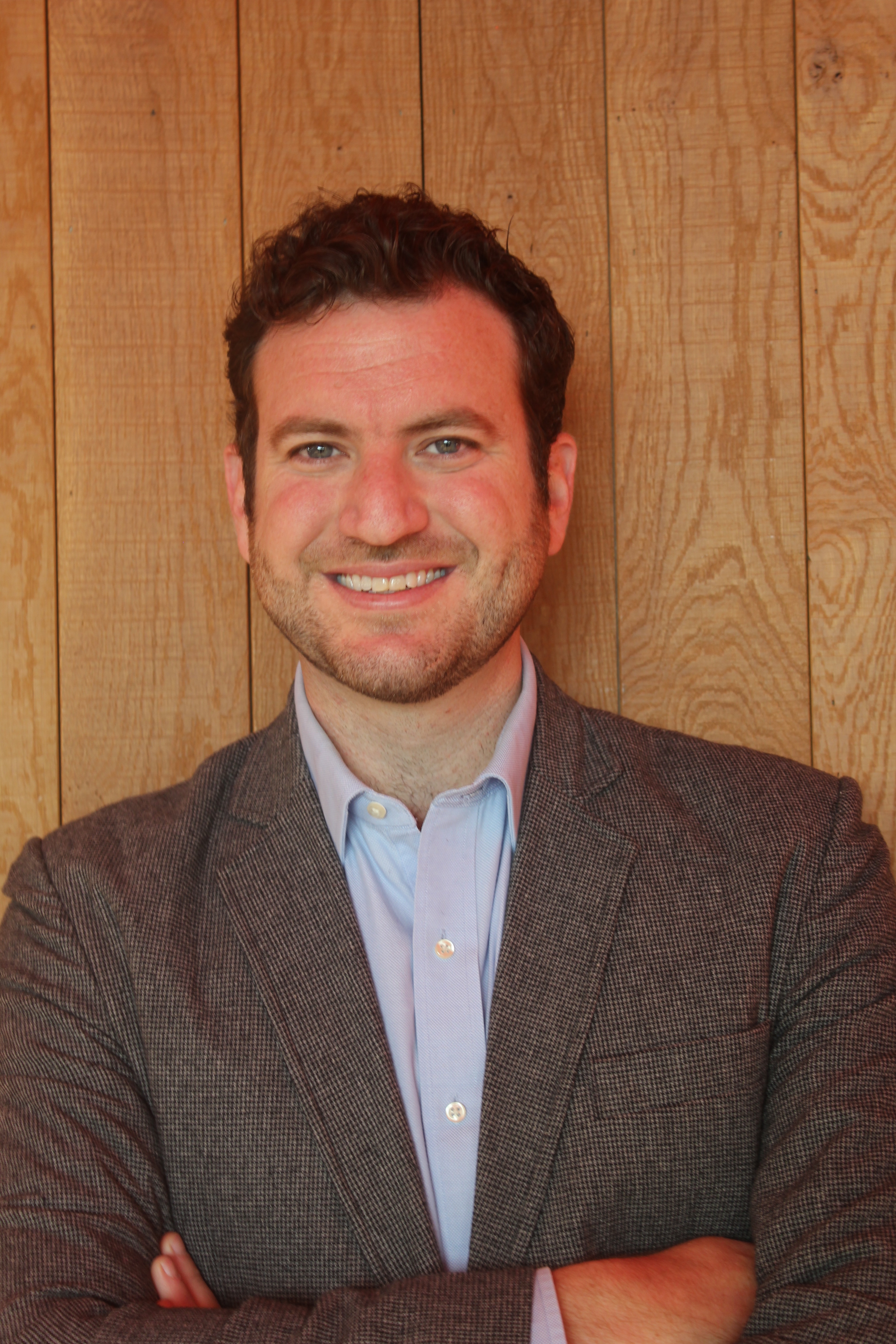
He is a former General Partner at Google Ventures (GV) in Europe, former head of Google for Entrepreneurs in Europe, and founding head of Campus London, Google's first startup hub. Eze writes on Israeli tech, venture capital, artificial intelligence, and founder strategy.
He is also the founder of Techbikers, a nonprofit that brings together the startup ecosystem on cycling challenges in support of Room to Read.
- Your customers don’t care which AI model you use - September 28, 2026
- Weekly Firgun Newsletter – September 24 2026 - September 25, 2026
- AI neo-labs have raised $11.6 billion. What have they shipped? - September 23, 2026