Yesterday was not just another day in the calendar for most Israelis and much of the Jewish diaspora. Three years ago, Hamas carried out the deadliest massacre of Jews since the Holocaust. We remember those murdered, the suffering of the hostages and their families, and the communities whose lives were shattered. The passage of time has not made that loss smaller and the wound is still open.
As someone who hasn’t lived in Israel continuously for many years, one image from those first days has stayed with me: Israelis abroad searching desperately for flights home. Not running from the fire. The opposite. People interrupted honeymoons, studies and careers to return, serve and help. At airports, strangers offered to buy tickets for reservists. Faced with unimaginable danger, their instinct was to move towards home.
That same instinct spread across the Israeli and Jewish community. Volunteers organised food, transport and accommodation. Tech workers applied their skills to civilian emergency operations. Jewish communities abroad mobilised on an extraordinary scale: the Jewish Federations of North America’s emergency campaign ultimately raised $908 million for relief and recovery. Across profound differences, people found a shared responsibility to show up. The extreme circumstances strangely brought us closer together.
From showing up to building
As an investor in Israeli founders, I’ve watched that sense of responsibility find its way into the companies being built today.
One of our portfolio CEOs took marketing lessons to cover for his CMO who spent over 100 days in reserve duty. We invested in founders that had to shut down their previous company after Oct 7 as they served in a special unit and were called for extended reserve service. In both cases, the founders didn’t complain, they stepped up to the challenge.
These aren’t isolated stories. Founders today want to build something consequential, solve problems they understand personally and help secure a future they refuse to give up on. That shows up in the data too: roughly 775 new startups were founded in Israel in 2025.
AI is now the centre of gravity. Core AI companies, those building models and infrastructure, raised $3.2 billion in 2025, about a quarter of all capital, and AI accounted for two-thirds of Israeli exit value in the first half of 2026. The bottleneck is talent: demand for core AI specialists already outstrips the pipeline of new graduates several times over.

Why we’re bullish on Israeli founders
- Global from day one. With a small home market, Israeli founders build for the world from the start. Tech exports reached $85 billion in 2025, 58% of Israel’s total exports.
- Operational experience early. Many founders carried real responsibility for urgent, high-stakes problems in their early twenties. They know the difference between a demo and something that works under pressure.
- Execution under constraint. Teams kept shipping through reserve duty, rocket alerts and disrupted operations. Resilience isn’t a slogan in this ecosystem. It has been tested.
- Dense, trusting networks. The community that showed up after October 7 shows up for founders too: first customers, first hires, honest feedback.
- Proximity to the problem. In a growing number of categories, Israeli founders are building solutions to problems they have lived through themselves.
The numbers, honestly
According to the Israel Innovation Authority’s 2026 report, Israeli tech fundraising reached approximately $14.6 billion in 2025, up 30% year on year, and so far in 2026 (up to Q3) Israeli startups raised $13.2 billion. Israel ranked as the fourth-largest fundraising hub in the world, behind only San Francisco, New York and Boston. So far in 2026, Israeli startups raised
AI companies raised $11.8B in 2025, 89% of all capital raised. The more meaningful figure is that the 364 Core AI companies, which build models, infrastructure and enabling technology, raised $3.2B, or 24% of the total.
In terms of exits, there were 33 AI exits worth $43B in H1 2026, 66% of all Israeli tech exit value. Excluding Wiz leaves roughly $11B, almost double all of 2025.
The recovery is uneven, though, and as a pre-seed investor I feel that directly. Rounds below $10 million fell to a decade low, while rounds above $50 million grew to $8.4 billion. The share of private Israeli tech employees based in Israel has dropped to 62% from 69% in 2019, and R&D headcount fell for the first time in a decade. The capacity to build has endured, but early-stage founders need more support than the headline numbers suggest. I’ve written more about this in Israeli High-Tech 2026: Stronger, Bigger and More Vulnerable Than It Looks.
Defence tech: the new cyber?
I’d argue Israeli defence and resilience tech has the potential to become the new cyber: another globally significant category built on exceptional talent, direct knowledge of urgent problems and the ingenuity to solve them under constraints.
The parallel is compelling. Israel’s cybersecurity ecosystem grew from technical expertise, operational experience, close networks and access to customers. Defence tech draws on the same strengths, across autonomy, robotics, sensors, communications and critical infrastructure protection.
The Israeli numbers are now moving fast:
- Israeli defence-tech startups working with the Ministry of Defence raised nearly $3 billion in H1 2026, triple the roughly $1 billion raised in all of 2025. Defence and dual-use companies accounted for nearly 30% of all capital invested in Israeli tech in that period.
- The Ministry of Defence placed around $330 million in orders with startups in H1 2026, double the same period a year earlier. The number of defence-tech companies under its oversight has grown to 322 since the war began.
This is happening as venture capital globally rediscovers physical products. Defence-tech startups raised $12.3 billion worldwide in the first half of 2026, already above the 2025 total, though most of that went to a handful of US companies. Israel has the talent and the operational insight. The opportunity is to turn them into globally significant companies, not just suppliers to the home market.
The next wave of iconic Israeli companies is being built now
Turning this momentum into enduring businesses won’t be automatic. Hardware needs manufacturing capacity and longer paths to revenue. Defence customers move slowly. Access to some European markets has become harder for Israeli defence companies, which makes dual-use positioning and diverse export routes essential rather than optional.
For investors, that means patient capital, early non-dilutive validation through MoD and DDR&D programmes, and backing founders who can sell to civilian and international customers as well as their own government.
The moves from bits (software) to atoms (hardware) means that we might start seeing more diversity in the startups that get backing. From consumer products to defence, both the advancement of AI and the appetite from investors makes me very excited to be actively deploying in the Israeli market with Remagine Ventures.
Three years after October 7, that is what gives me hope: people who understand the stakes and still choose to take responsibility for what comes next.

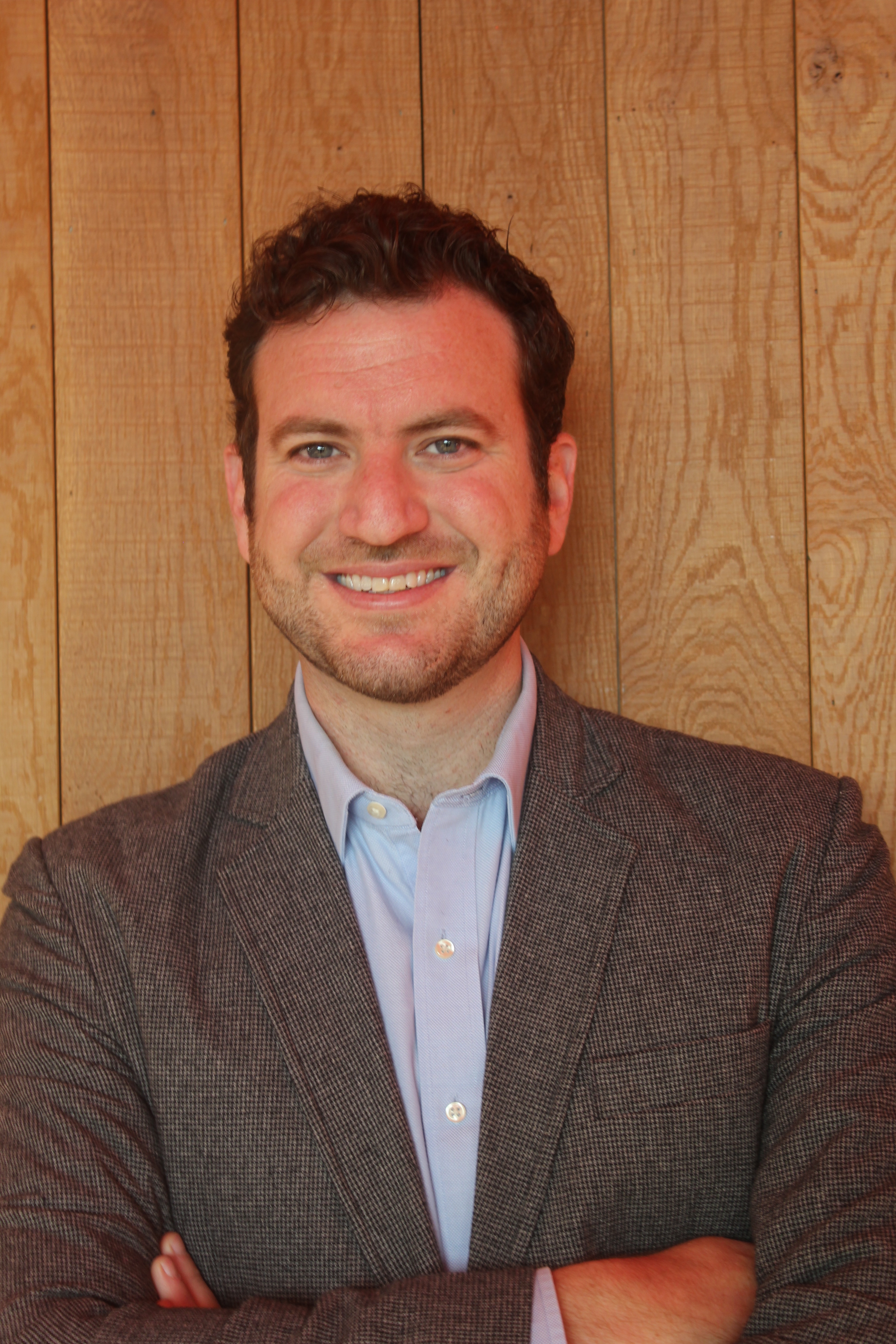
He is a former General Partner at Google Ventures (GV) in Europe, former head of Google for Entrepreneurs in Europe, and founding head of Campus London, Google's first startup hub. Eze writes on Israeli tech, venture capital, artificial intelligence, and founder strategy.
He is also the founder of Techbikers, a nonprofit that brings together the startup ecosystem on cycling challenges in support of Room to Read.
- How Israeli tech changed since October 7 - October 8, 2026
- Building Brakes for Rogue AI - October 5, 2026
- Weekly Firgun Newsletter – October 2 2026 - October 4, 2026